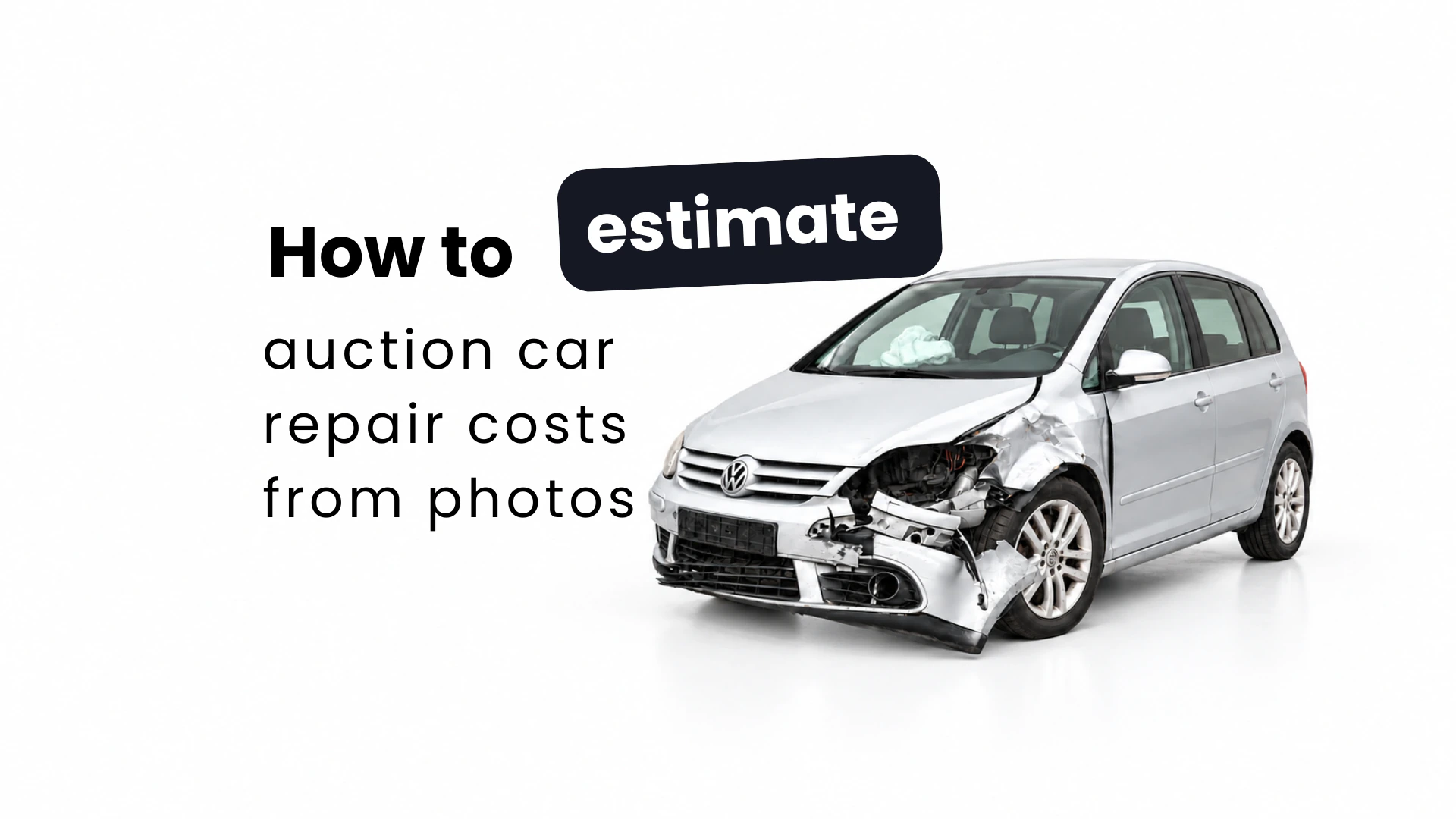
Car Auction Condition Reports in Europe: How to Read Them

Car auction condition reports can help buyers understand what is known about a vehicle before bidding. However, their detail and reliability vary between auction platforms and individual listings.
There is no single Europe-wide inspection standard for auction vehicles. Information may come from the seller, auction staff, an insurer, a public authority or a vehicle technician.
EU Car Auctions brings listings from European auction platforms together in one place. We do not inspect or sell the vehicles. Always open the original listing and review its complete description, photos and terms before bidding.
Why Condition Reports Differ
The amount of information available depends on who prepared the listing, whether the vehicle was inspected in person and which functions were tested.
The seller may report known faults, while auction staff or a broker may add photos and visible damage. A technician may complete a more structured inspection, but only within a defined scope.
A long description does not necessarily mean that the vehicle received a complete technical inspection. The important question is not only what the report says, but also how the information was obtained.
Four Levels of Condition Information
The following levels are a practical way to evaluate auction information. They are not official categories used by every platform.
| Information level | What it may tell you | Main limitation |
|---|---|---|
| Seller-reported | Information supplied by the owner or seller about known faults or operating condition | It may not have been independently verified |
| Visually observed | Damage or missing parts that could be seen during an inspection | No dismantling or internal diagnosis was completed |
| Function-tested | A specific function was checked, such as whether the engine started | The result applies only to that function and the time of the check |
| Technician-inspected | A trained technician completed a structured inspection | Hidden faults and items outside the inspection scope may remain undetected |
A listing may combine several levels. For example, the seller may report a mechanical problem while auction staff add photographs and confirm that the engine starts.
How to Read a Condition Report
Before relying on a condition statement, check:
- who provided the information;
- when the inspection or test was completed;
- which components and functions were checked;
- whether the information was independently verified;
- whether the text and photos support each other;
- which areas or systems are not covered;
- whether the listing excludes hidden faults.
Do not treat missing information as a positive result. If a component or function is not mentioned, it may not have been checked. Our bidding checklist covers the photos, documents and fees to review alongside the condition report.
What Common Condition Terms May Mean
Exact definitions vary between platforms, so the original listing always takes priority.
| Term | What it may tell you | What it does not confirm |
|---|---|---|
| Damaged | One or more defects have been reported or are visible | The complete extent or repair cost |
| Mechanical fault | A mechanical problem has been reported or detected | The exact cause or all required repairs |
| Starts | The engine started during a check | That the vehicle drives or is roadworthy |
| Moves or drives | The vehicle moved under its own power during a limited check | That it completed a road test or can be driven normally |
| Untested | The function or component was not checked | That it works or is free from faults |
| Normal wear | Visible wear was considered consistent with the vehicle’s age or use | That no mechanical or hidden faults exist |
| Known damage | Damage already reported or noticed is included | That every defect or secondary damage has been identified |
| Sold as seen | The vehicle is offered in its current disclosed condition | That all mandatory buyer rights are automatically removed |
Read what “run and drive” means at a car auction and how it differs from “engine start”.
What a Condition Report Does Not Confirm
Even a detailed report may not identify every hidden fault or confirm that the vehicle is roadworthy, reliable or suitable for registration.
It also does not provide a final repair estimate unless this is explicitly stated. Information recorded during an earlier inspection may no longer describe the vehicle’s condition when it is collected. Our guide to damaged car auctions explains the risks that photos and descriptions can hide.
The Practical Rule
Treat every statement as evidence only of what was specifically reported, observed or tested at that time.
If an important component, area or function is not covered, its condition remains unknown.
Condition terms, inspection practices and listing formats vary between auction platforms. Always verify the current description and terms in the original listing.